
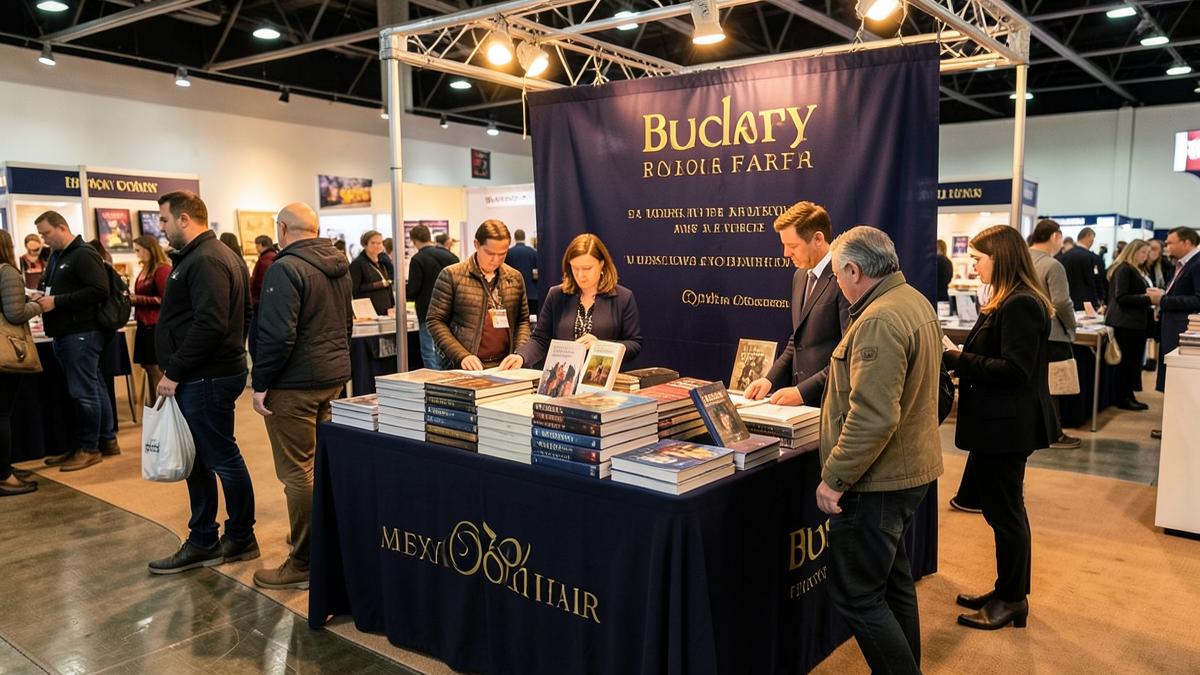
Book fairs are one of the few places where readers, librarians, bookstore buyers, and media all walk past your title in the same afternoon. Yet most authors treat their booth as an afterthought: a folding table, a stack of paperbacks, and hope. The authors who leave a fair sold out are the ones who treated the booth as a storefront and the event as a campaign.
Why Book Fairs Still Matter for Authors
Online, you compete with millions of titles and a two-second thumbnail. At a fair, you get something Amazon can never give you: a face-to-face conversation, a physical book in a reader's hands, and a signature that turns a stranger into a lifelong fan. Fairs also open doors that are hard to knock on remotely — indie bookstore stock orders, library purchases, festival invitations, and local press.
Your Booth Has Three Seconds
Visitors walk an aisle at roughly one booth per three seconds. In that window they decide whether to slow down. Everything in your setup should serve that single decision: a large readable banner, a clear genre signal, and a book cover facing forward at eye level.
- Vertical banner with your book cover, title, and a one-line hook — readable from 20 feet.
- Tiered risers so covers face outward instead of lying flat on the table.
- A branded table cloth in your cover's color palette — no bare tables.
- One clear price sign; hidden pricing kills impulse buys.
- Good lighting if the hall is dim — a small clip light doubles perceived quality.
Table Layout That Encourages Buying
Keep the front edge of the table clear so readers can set down a bag and pick up your book. Put the hero title in the center, supporting titles or formats to the sides, and freebies (bookmarks, sample chapters) at the corner nearest the aisle. Stand beside the table, not behind it — a barrier of furniture between you and the reader measurably reduces conversations.
Marketing Before the Fair Decides Half Your Sales
The most successful booths are busy in the first hour because people arrived looking for them. Two to three weeks out, announce your booth number across email and social, post a short video walkthrough of what you'll bring, contact the event's organizers about author panels and signing slots, and pitch local media with a genuine story angle. A busy booth attracts more traffic — crowds are their own advertisement.
- Email your list with the date, hall, and booth number — twice.
- Post a short book trailer or behind-the-scenes reel in the week before.
- Offer an event-only bundle or signed-copy price to create urgency.
- Line up a signing time slot and promote it as a mini-event.
The Materials That Pay for Themselves
Bring more inventory than you think you need — running out at noon is the most expensive mistake at a fair. Alongside books, bring bookmarks with your cover and a QR code, business cards, a signup sheet or tablet for emails, a card reader for payments, a signing pen, and change for cash buyers. Print quality matters here: a professionally printed book and matching collateral read as credibility.
How to Talk to Readers Without Selling
Skip the pitch. Open with a question — "Do you read thrillers?" — and let the answer decide the conversation. Have a 10-second logline ready and a 30-second version for people who lean in. Sign every copy you sell; a signature turns a book into a keepsake and makes returns emotionally unlikely.
Capture the Follow-Up
Most of a fair's value arrives after the fair. Collect emails at the booth, photograph your setup and the crowd for social proof, note every bookstore or library contact, and send a thank-you email within 48 hours while the memory is warm. One fair, worked properly, can seed months of sales.
Ready to take the next step?
Get booth materials and event marketing helpFrequently Asked Questions
How important is booth setup at a book fair?
Extremely. Attendees decide in about three seconds whether to stop, so signage, forward-facing covers, and a branded table have a direct and measurable effect on how many people approach and buy.
How many books should I bring to a book fair?
Plan for a conservative sell-through estimate and then add 50%. Running out of stock mid-event costs far more than carrying extra boxes home.
What should I bring to an author booth besides books?
A banner, tiered display risers, branded table cover, bookmarks with a QR code, business cards, an email signup, a card reader, and a signing pen.
Should I market before the book fair?
Yes. Pre-event email, social posts, and a promoted signing slot are what fill your booth in the first hour, and a busy booth pulls in more passing traffic all day.
Do signed copies sell better at events?
Consistently. A signature and a short personal note turn a commodity purchase into a keepsake and often prompt buyers to take a second copy as a gift.
Related Services